
Understanding Credit Card Readers: Key Insights
Intro
Credit card readers have become ubiquitous in today’s commerce environment. The way we shop, dine, and even interact with businesses has fundamentally changed thanks to these devices. It's not just about swiping a card anymore; it’s a gateway to a seamless financial exchange. As technology continues to advance, understanding how credit card readers work, their types, and their impact on daily transactions can enrich one’s financial literacy.
In the following sections, we will explore the pivotal role of credit card readers, touching on their evolution over time and how innovations like mobile payment systems have reshaped user experiences. In addition, we will delve deeper into specific aspects such as security features that protect consumer information during transactions. This comprehensive narrative aims to shed light on why grasping the intricacies of credit card readers is significant, not just for businesses but also for consumers navigating an increasingly digital marketplace.
Market Insights
Credit card readers are not merely tools; they represent a dynamic segment of the financial ecosystem. With the market expanding at a pace reminiscent of a sprinter off the blocks, keeping an eye on current trends and developments is paramount.
Current Trends and Developments
The rise of contactless payments has set the stage for a new era in the realm of credit card readers. Devices capable of processing NFC (Near Field Communication) transactions have surged, driven by consumer demand for convenience and speed. In addition, many businesses are shifting towards integrated systems that consolidate POS functionalities, making detailed transaction analytics accessible at a glance.
"The trend of cashless transactions continues its upward trajectory, highlighting a shift in consumer behavior that favors efficiency and security."
Market Analysis and Predictions
Analysts foresee the global market for credit card readers hitting unprecedented heights. Factors driving this growth include the proliferation of e-commerce and the increasing adoption of digital wallets. As more merchants realize that mobile solutions can enhance their operations, the investment in these devices is expected to soar. It's plausible to anticipate advancements in biometric authentication in credit card readers, thus merging security with user experience.
Sector-Specific Insights
Different sectors are leveraging credit card readers in distinctive ways. For instance, the retail industry is harnessing advanced analytics from their readers to tailor promotions. In the food and beverage sector, the efficiency of mobile card readers has optimized service speed during busy hours. Service-based businesses, such as salons and repair shops, find portable readers invaluable, offering a hassle-free way to bill clients regardless of location.
End
Together, these insights paint a picture of a landscape ripe for exploration and innovation. As we move through this article, we’ll unpack these themes and provide a robust understanding of credit card readers, ultimately enhancing both consumer and investor awareness in this evolving financial landscape.
Preface to Credit Card Readers
In the landscape of modern commerce, credit card readers have become indispensable. They serve as the backbone for seamless transactions, enabling businesses to accept payments efficiently and securely. Individuals, from brick-and-mortar store owners to mobile entrepreneurs, rely heavily on these devices. Just asking around, you'd find that a simple swipe or tap can make or break a sale; that’s how critical their role is.
Definition and Functionality
Credit card readers are devices that capture card details from credit or debit cards and process transactions. The functionality of these readers varies, but their core purpose remains consistent: convert the physical act of card swiping into a digital transaction. They can handle cards with magnetic stripes, EMV chips, and even contactless payment methods, adapting to the various technologies available today. In essence, they act as a bridge between the consumer and the financial institutions, ensuring that money changes hands quickly and accurately.
Let’s break down the primary functions:
- Data Capture: Reads magnetic strips, EMV chips, or contactless payment signals.
- Transaction Encryption: Protects sensitive card information during the transaction process.
- Connectivity: Syncs with point-of-sale systems or mobile devices to process payments.
A typical credit card reader will often also include components such as a small screen to display transaction details and a keypad for user input.
Importance in Modern Transactions
The role credit card readers play in the everyday marketplace cannot be overstated. Consider the last time you made a purchase; you likely used a card or mobile payment option. This method has nearly replaced cash transactions in numerous environments, pointing to a broader shift towards digitization.
Among the countless reasons why credit card readers are crucial, here are some key points:
- Speed of Transaction: Unlike traditional payment methods, card transactions can be completed in mere seconds, enhancing customer satisfaction.
- Security: Advanced technologies, like encryption and compliance with standards such as PCI DSS, make these devices safer for consumers.
- Increased Sales: Businesses equipped with card readers can cater to a broader range of customers, including those who prefer cashless transactions, thus increasing revenue potential.
"Utilizing a credit card reader isn’t just about keeping pace; it’s about staying relevant in a rapidly shifting commercial environment."
In summary, it’s clear that the understanding of credit card readers is essential—not just for business owners looking to optimize their operations but also for consumers seeking convenient payment options. As we continue this exploration, we will delve deeper into the specifics of these devices, shedding light on their components and types, ensuring a well-rounded grasp of their functionality and significance in our daily commerce.
Physical Appearance of Credit Card Readers
The physical appearance of credit card readers is more than just aesthetics; it defines usability and efficiency in transaction processing. In an age where every second counts, especially in retail environments, how these devices look and feel can significantly impact user experience. Thus, understanding the physical characteristics of credit card readers is essential for both vendors and consumers alike. This section will cover some general characteristics followed by various designs that reflect the functionality of today’s payment technology.
General Characteristics
When observing credit card readers, several features stand out. Firstly, they come in various shapes and sizes to accommodate different business needs. Most devices prioritize user-friendly interfaces, ensuring that customers can complete transactions with minimal hassle. This means you will often see large buttons, clearly labeled card slots, and readable display screens.
Moreover, durability is key. Credit card readers must withstand heavy daily use, so manufacturers often use tough materials that can bear the brunt of retail life. Furthermore, portability is increasingly becoming a sought-after trait, particularly for businesses that operate in dynamic environments.
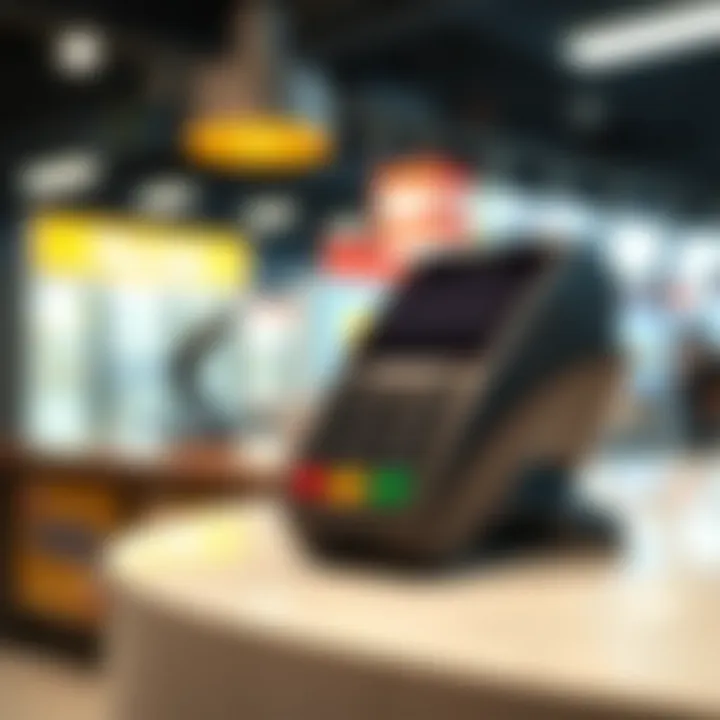
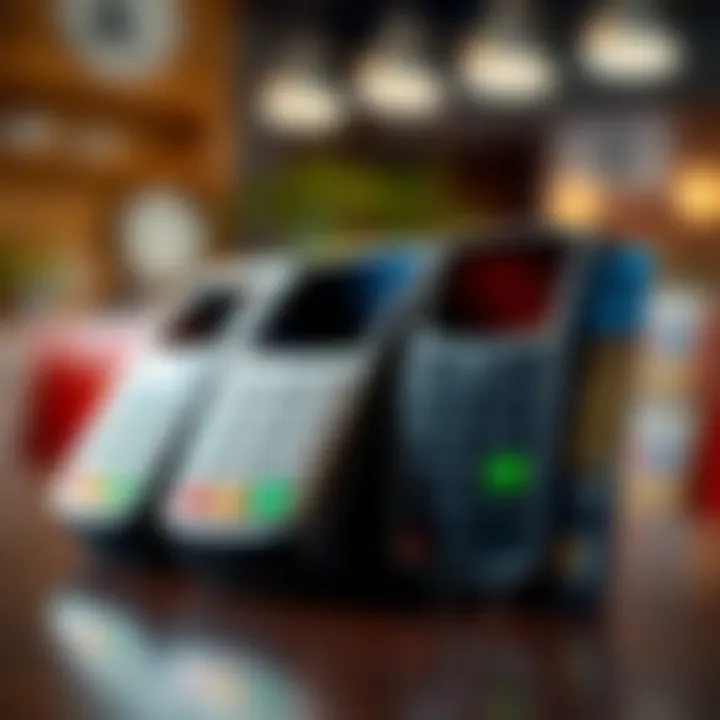
Additionally, color coding can be seen in some models, helping retailers quickly identify the intended use or function of the device. For example, green lights may signify readiness to transact, while red lights may indicate an error.
Types of Credit Card Readers Based on Design
Understanding the different types of credit card readers allows users to choose what fits their specific situation best. Each model shines in certain environments and circumstances.
Handheld Readers
Handheld readers represent a significant leap in transactional flexibility. These devices allow staff to process payments right at the point of service, be it at the table of a restaurant or in the aisle of a store. One key characteristic is their portability. Typically lightweight and compact, these readers empower retailers to operate without being tethered to a cash register.


A unique feature of handheld readers is their capability to connect to mobile devices via Bluetooth. This allows for seamless integration with mobile point-of-sale systems. The convenience and rapid transaction speed make handheld readers popular among small businesses that may not have the luxury of dedicated checkout counters. However, one must also consider the downside: they can be more prone to theft compared to stationary models.
POS Terminal Readers
POS terminal readers are what most people envision when they think of credit card readers. They usually have a fixed position at a checkout point and process transactions in a straightforward manner. A significant aspect of POS terminals is their robustness and feature set. Many come equipped with advanced capabilities such as receipt printing, inventory management, and loyalty program integration.
One highlight of these readers is their large display screens. The size allows for better visibility for both the cashier and the customer, ensuring clearer communication during the transaction. However, their size and fixed location mean that they lack the portability of handheld units, limiting their usage mainly to traditional retail setups.
Mobile Card Readers
Mobile card readers have become game-changers for many small businesses and freelancers. With the increase in mobile payment solutions, these devices allow users to swipe, dip, or tap card payments using just a smartphone or tablet. The main characteristic here is ease of use; the setup process is usually straightforward, requiring no additional training.
Many come with dedicated applications that provide detailed transaction histories and analytics, making them not only functional but valuable for business insights. However, being reliant on mobile devices may be seen as a disadvantage. Battery life becomes crucial, and any issues with the smartphone could interrupt the payment process.
In sum, the physical appearance of credit card readers encompasses various designs, each meeting distinct needs and preferences. Understanding the characteristics of these devices is vital in navigating the landscape of modern commerce.
Components of a Credit Card Reader
Understanding the components of a credit card reader is crucial for grasping how these devices function and their role in facilitating smooth transactions. Each part plays a significant role in ensuring efficient and secure processing of card payments. A well-crafted reader combines functionality with user-friendly elements, providing various benefits to both merchants and consumers. The components not only enhance usability but also add layers of security, making them indispensable in today’s commerce landscape.
Card Slot and Chip Reader
The card slot is the entry point for any credit card, making it a fundamental component. This is where users insert their cards for processing. Integrated within the slot is the chip reader, an essential part of modern credit technology. Chip cards, or EMV (Europay, MasterCard, and Visa) cards, are designed to combat fraud by generating a unique transaction code every time they are used. This simple but effective feature means that even if the card information is compromised, the details can't be reused. The reliability of the card slot and the chip reader ensures that users can complete transactions quickly and with confidence.
Magnetic Stripe Reader
In addition to chip technology, the magnetic stripe reader remains a crucial aspect of many credit card readers. Though technology has evolved, the magnetic stripe still plays a vital role, particularly in regions or situations where chip-reading capabilities may not be possible. The magnetic stripe contains essential card details that can be read when the card is swiped. While this technology might seem outdated, it is essential for backward compatibility and convenience. However, it is important for users to understand that this method carries more risk of data theft, as the data stored can be cloned more easily than chip data.
Display Screen
The display screen serves as the interaction point between the card reader and the user. Depending on the sophistication of the device, the display can range from a simple LED indicator to a full touchscreen interface. A high-quality display provides clear transaction details, including amounts, prompts for PIN entry, or error messages. It allows for an efficient communication channel, breaking down complex transactions into understandable information. A good screen can enhance the user experience, making payments as seamless as sliding a card through its slot.
Keypad Interface
The keypad interface is another integral component of credit card readers. It typically allows users to enter their PIN or navigate through options during the transaction process. A versatile keypad can also facilitate various payment types beyond card transactions, like loyalty programs or coupons. The design and functionality of the keypad can influence the overall efficiency of the payment process. A responsive, well-organized keypad is necessary for reducing transaction time and improving the customer service experience.
The combination of these components ensures that credit card readers operate at their peak, allowing businesses to process payments efficiently while safeguarding sensitive user data.
In summary, each component of a credit card reader serves a distinct purpose but is interdependent with others to form a cohesive unit. Understanding these elements allows consumers and investors to appreciate the sophistication and reliability of credit card readers in daily transactions.
Types of Credit Card Readers
Understanding the various types of credit card readers is pivotal for businesses and consumers alike. The right choice can ensure smooth transactions, enhance customer experience, and keep up with technological advancements. Each type offers unique advantages and considerations tailored to specific needs, ensuring that everyone from a small vendor to a large retail chain can find a suitable option.
Traditional Countertop Readers
Design and Usage
Traditional countertop readers have a sturdy design that’s built to last. These readers commonly reside at cash registers in retail shops or restaurants, providing a reliable method for processing payments. The design is often user-friendly, featuring clear displays and responsive keypads that make them accessible for staff of all levels.
One key characteristic is that they usually offer multiple payment options, making them versatile for various transaction types. This versatility is a major reason they're the go-to choice for many businesses. Many countertop readers also have integrated printers that allow for immediate receipt generation, enhancing customer satisfaction with quick service. However, they are limited by location, as businesses need to ensure they have power and internet connections nearby.
Connection Types
When discussing connection types for traditional countertop readers, what stands out is their typical reliance on wired connections. Many devices connect directly to the store's point of sale system via USB or Ethernet cables, offering continuous stability. However, some may also use wireless options like Bluetooth or Wi-Fi for added flexibility.
This wired setup generally ensures a strong connection, reducing transaction failures and downtime, which is critical during busy hours. Yet, the downside is that installation can be cumbersome, restricting placement options. Keep in mind, a reliable connection is a lifeline in fast-paced environments, making traditional options a strong contender.
Mobile Readers
Smartphone Integration
Mobile readers elevate the convenience of transactions significantly. They work by integrating with smartphones, allowing businesses to process credit card payments through a mobile app. One significant advantage here is the ease of use; small vendors and market stalls particularly benefit from this feature as it enables customer transactions regardless of location. This adaptability contributes directly to increased sales opportunities, while freeing up capital by minimizing upfront costs associated with heavy equipment.
However, integration relies heavily on having a capable smartphone and a robust internet connection, which could be a limitation for some users.
Portability Features
The portability features of mobile readers cannot be overstated. They are designed to be lightweight and compact so that vendors can easily carry them while on the go. This characteristic transforms transaction capabilities for mobile businesses, pop-up retailers, and food trucks, making every sale seamless, whether in a local market or at an event.
An additional bonus is that many mobile readers are battery-operated, allowing them to be used in places without electrical outlets. Yet, frequent reliance on battery power means that users need to monitor charging effectively to avoid disruptions during peak sales, which can be a bit of a hassle.
Integrated Readers
Embedded Systems
Embedded systems in credit card readers represent a blend of technology and design that enhances functionality. Often found within self-service kiosks or checkout systems, these readers streamline the payment process by integrating directly into existing hardware, thus creating a unified transaction experience. The integration reduces the need for additional devices and minimizes clutter, promoting efficiency.
The largest benefit is speed; transactions can be completed more swiftly, increasing turnover rates for businesses. However, on the downside, if something goes wrong with the embedded system, the entire checkout process can come to a halt, potentially causing delays and customer dissatisfaction.
Shopping Cart Integration
Shopping cart integration is another advancement that has transformed how consumers shop online. By connecting directly to e-commerce platforms, integrated readers make processing payments seamless for online transactions and in stores alike. This feature offers a smooth, coherent experience from the point of selecting items to final payment. It allows businesses to leverage data analytics for customer preferences, potentially enhancing promotional strategies.
One of the unique features of shopping cart integration is the ability to automatically sync inventory and sales data. This offers a real-time glimpse into stock and sales, which can be a game-changer for planning and strategy. However, the reliance on stable software and internet connections means that businesses need robust IT support to maintain functionality without hiccups.
Technological Evolution of Credit Card Readers
The pace of technological advancement in the realm of credit card readers has transformed the way we handle transactions today. Understanding this evolution helps shed light on the benefits that these adaptations bring to both consumers and businesses. The main takeaway here is how these innovations enhance security, efficiency, and user experience across the board, making them indispensable in today’s commerce landscape.
From Magnetic Stripe to Chip Technology
The journey from magnetic stripe cards to chip-enabled cards represents a significant leap in how we secure card transactions. Magnetic stripes, which have been the norm for many years, are vulnerable to skimming and cloning, allowing fraudsters to easily access sensitive information. In response, the industry saw the rise of chip technology or EMV (Europay, MasterCard, and Visa) standards.
Here's why this leap matters:
- Enhanced Security: Chip technology generates a unique transaction code for each purchase, making it exceedingly difficult for counterfeiters.
- Global Standardization: As more countries adopt EMV, travel and commerce becomes seamless—void of lingering issues around differing payment methods.
- Increased Trust: Consumers are more likely to trust businesses that use chip readers, recognizing the strength of their security measures.
In short, moving beyond magnetic strips wasn't just a matter of complying with regulations; it became a crucial step to protect users from alarming levels of theft and fraud.
Prelude of Contactless Payment Systems
The introduction of contactless payment systems has further revolutionized how transactions are conducted. The idea of swiping a card has given way to simply hovering it near a reader, which may seem mundane but carries enormous implications for efficiency and customer satisfaction.
Contactless payments utilize NFC (Near Field Communication) technology, which allows for instant data transmission between the card and reader. Some significant aspects include:
- Speed and Convenience: Transactions are completed in seconds, reducing wait times in busy areas like cafes or retail stores.
- Health Considerations: Especially relevant in the post-COVID world, fewer touches contribute to minimizing potential contamination—an added layer of reassurance for customers.
- Integration with Mobile Wallets: Services like Apple Pay and Google Wallet have significantly contributed to the trend, offering consumers more choices and flexibility.
In a nutshell, contactless technology embodies a push towards not just speed but a more interactive, effortless experience.
Integration with E-Commerce Platforms
As the digital landscape continues to grow, integrating credit card readers with e-commerce platforms has become increasingly important. This evolution is not merely a trend but a necessity in today’s economy. Businesses that embrace this integration stand to gain a significant competitive edge.
Consider these essential points:
- Unified Transaction Handling: Integration allows businesses to manage both online and in-person transactions under one roof, streamlining operations.
- Improved Customer Insights: Data collected from transactions can help businesses understand purchasing behavior, enabling tailored marketing strategies.
- Flexibility and Scalability: E-commerce integration means businesses can easily scale as they grow, adapting to increased demand without overhauling their transaction systems.
To position themselves for the future, companies must embrace these integrated solutions to remain competitive, ensuring they are not left in the dust as the landscape continues to evolve.
The technological evolution of credit card readers has moved from mere transaction tools to sophisticated devices that enhance security, speed, and user experience, reshaping modern commerce.
Understanding the strides in technology behind credit card readers is key to making informed decisions—both for consumers wanting safer payment methods and for businesses eager to adapt to the future.
Security Features in Credit Card Readers
In today's fast-paced financial landscape, the security features integrated into credit card readers are indispensable. As transactions accelerate and the reliance on electronic methods of payments continues to grow, the need for robust security mechanisms intensifies. Credit card readers must protect sensitive data from various threats, ensuring both merchant and customer trust. The inclusion of advanced security protocols not only safeguards transactions but also enhances the overall reputation of businesses involved. Let's delve into the core aspects of what makes these security features vital.
Encryption Technology
Encryption technology serves as a formidable guardian for credit card transactions. Simply put, it transforms the card information into a coded format that is nearly impossible for unauthorized users to interpret. This technology plays a pivotal role in protecting sensitive data during electronic transmission. When a credit card is swiped or tapped, the reader encrypts the data before sending it to the payment processor. Without encryption, a swindler could easily intercept and misuse card information, leading to identity theft or unauthorized charges.
Choosing a credit card reader equipped with strong encryption technology can drastically reduce the risk of fraud. Modern readers often incorporate AES (Advanced Encryption Standard) or RSA (Rivest-Shamir-Adleman) algorithms. These standards are continually updated to withstand the evolving threats posed by cybercriminals. The level of encryption used is a telltale sign of a reader’s capability to secure transactions.
Furthermore, end-to-end encryption (E2EE) takes security a step further by ensuring that data is encrypted on the reader and only decrypted at the payment processor’s end. This minimizes the potential points of vulnerability, making it harder for malicious entities to gain access to unprotected data.
Compliance Standards (PCI DSS)
Another cornerstone of security in credit card processing is adherence to the Payment Card Industry Data Security Standard (PCI DSS). This framework sets forth necessary guidelines for organizations that accept credit cards to protect cardholder data. Compliance with these standards is not just a best practice; it's essential for businesses wanting to maintain credibility and trust with customers. Failure to comply with PCI DSS can result in severe penalties, including hefty fines or, in dire cases, the loss of the ability to conduct credit card transactions.
The PCI DSS outlines several key requirements:
- Secure Network: Establish firewalls and maintain secure systems to protect card information.
- Data Protection: Encrypt cardholder data both in transit and storage.
- Regular Monitoring: Regularly test security systems and processes to identify vulnerabilities.
- Access Control: Limit access to sensitive data to only those who need it to perform their job functions.
- Maintaining an Information Security Policy: Develop and maintain a policy that addresses information security.
Compliance goes beyond mere technical requirements; it necessitates ongoing due diligence and periodic assessment of security measures. Regular audits not only keep businesses in line with PCI DSS mandates but also increase confidence among customers, knowing that their data is being handled responsibly.
Understanding encryption technology and compliance standards can significantly contribute to a safer transaction environment, bolstering consumer confidence and protecting merchants from financial losses.


Applications of Credit Card Readers
In the world of commerce, credit card readers are much more than mere transaction facilitators; they have become vital tools that influence how business is conducted across diverse sectors. The influence of these devices extends from enhancing customer experiences to enabling streamlined operations, impacting everything from small market stalls to expansive retail chains. In this section, we'll dissect the various applications where credit card readers find their footing, specifically within the retail and service sectors, event ticketing, and the ever-evolving landscape of mobile businesses.
Retail and Service Industries
The retail and service sectors stand at the forefront of credit card reader deployment. Here, these devices play a crucial role in ensuring that transactions are completed swiftly and securely. Consumers today expect a seamless checkout experience. Long lines and slow transactions can quickly sour the shopping experience, leading to customer dissatisfaction.
- Efficiency Boost: Credit card readers reduce the time spent at the cash register, allowing businesses to cater to more customers in less time. This efficiency is paramount, especially during peak shopping hours when every second counts.
- Diverse Payment Options: Retailers can cater to a wider clientele by accepting various payment methods, from credit to debit cards, and even mobile payment solutions. This flexibility is a significant selling point in today's tech-savvy consumer landscape.
- Transaction Security: In an era where data breaches frequently make headlines, security is non-negotiable. Advanced encryption and compliance with international standards help in protecting sensitive customer information, giving consumers confidence in the integrity of their payments.
Through these factors, retailers and service providers not only improve operational efficiency but also foster trust and loyalty amongst their clientele, making credit card readers indispensable in their day-to-day operations.
Event Ticketing and Services
In the realm of event ticketing, credit card readers have revolutionized how attendees purchase tickets and gain access to venues. Whether for concerts, sporting events, or exhibitions, the ease and speed with which people can obtain tickets have drastically changed the landscape.
- On-Site Transactions: Credit card readers allow for quick, on-the-spot ticket purchases that can prevent long queues and improve attendee flow. People tend to enjoy their experience more when they don’t have to wait in line, making this technology crucial for event organizers.
- Reducing Fraud: By utilizing chip technology and contactless payments, organizers can drastically reduce instances of fraud, protecting both the consumer and the event host's interests. This ensures a more secure environment for everyone involved.
- Data Collection: Event organizers can have better insights into consumer behavior by tracking sales statistics through credit card transactions. Such data helps in planning future events more effectively and tailoring experiences based on attendee preferences.
Thus, the application of credit card readers within event ticketing not only enhances the consumer experience but also supports the operational side of event management, contributing to its overall success.
Mobile Businesses and Marketplaces
Mobile businesses, ranging from food trucks to pop-up shops, have embraced credit card readers to meet the demands of modern consumers. In environments where mobility is essential, these devices prove their worth more than ever.
- Portability: Compact and portable card readers allow business owners to accept payments on-the-go. This means that transactions can happen in any location, breaking traditional barriers of brick-and-mortar shops.
- Real-Time Payments: With mobile card readers, payments are processed instantly, allowing business owners to have immediate access to their funds. This is particularly beneficial for small enterprises that may rely on these funds to replenish inventory or cover other essential expenses.
- Enhancing Customer Engagement: In a marketplace where engaging consumers is vital, mobile businesses can enhance their service by accepting payments quickly and not losing potential sales due to inadequate payment options.
The applications of credit card readers are vast, and they serve as crucial enablers of growth and efficiency across various industries. Their capacity to improve transaction speed, enhance security, and offer diverse payment options positions them as indispensable tools for modern business practices.
Choosing the Right Credit Card Reader
Choosing the right credit card reader can have a significant impact on business operations. It's not merely about picking a device; it's about streamlining transection processes and improving customer experience. When selecting a reader, various factors come into play, including transaction volume and required features. Understanding these aspects can help businesses make informed decisions that align with their operational needs and customer expectations.
Factors to Consider
Transaction Volume
Transaction volume is a crucial consideration when choosing a credit card reader, as it reflects how many payments a business processes daily. For instance, a small café might handle a few hundred transactions each week, while a high-traffic retail store or an e-commerce site can face thousands. Selecting a reader that can accurately accommodate this volume is key to maintaining efficiency and avoiding downtime.
The key characteristic of transaction volume is its ability to dictate the type of reader suitable for your business size and volume. A business with a high volume may require advanced features such as faster processing times and robust connectivity options, while low transaction volume environments can work well with simpler, cost-effective models. The unique feature of this consideration lies in its influence on operational scalability; a business anticipating growth should invest in a reader that can adapt to increased demand without significant additional costs.
Advantages of sizing the credit card reader to match transaction volume include enhanced customer satisfaction and fewer disruptions during peak times. Disadvantages might arise if businesses miscalculate their needs, leading to a mismatch between capabilities and operational demands.
Required Features
Another essential aspect to keep in mind when selecting a credit card reader is the required features that align with your business needs. The key characteristic of required features is their potential to enhance transactional security, customer experience, and operational efficiency. For instance, certain businesses may require advanced options, like contactless payment capabilities or integration with existing point-of-sale systems.
The unique feature of focusing on required features is that businesses can select devices that offer customization options to cater specifically to their clientele or operational workflows. For example, if a retailer often conducts outdoor sales or markets at events, a mobile and portable reader with Bluetooth connectivity would be a pivotal choice. These added features come with benefits such as improved customer interactions and reduced processing time, but they can also mean higher initial costs and increased complexity during setup.
Cost Considerations
Cost is always a primary factor in any purchasing decision. When it comes to credit card readers, pricing can vary widely based on features, capabilities, and initial investment versus long-term usage. Some devices might appear expensive upfront but offer features that save money over time, such as lower processing fees or reduced maintenance costs. On the flip side, cheaper devices might lead to increased costs down the road due to compatibility issues or inefficient processing that can frustrate customers and staff alike.
Businesses should analyze both the initial costs and the anticipated ongoing fees, making it essential to see beyond the sticker price. Additionally, examining contracts and merchant service agreements can reveal unforeseen costs, such as transaction fees, monthly service fees, and equipment leasing charges.
Understanding the cost landscape is vital for ensuring a solid return on investment and choosing a credit card reader that supports, rather than hinders, business growth.
Ending: The Role of Credit Card Readers in Commerce
In the expansive landscape of modern commerce, credit card readers have carved a pivotal niche. These devices do more than simply facilitate transactions—they form a bridge between consumers and merchants, driving financial exchanges that are instantaneous and secure. Understanding their role is essential, not just for the businesses that utilize them, but also for consumers navigating an increasingly cashless society.
The Centrality of Credit Card Readers
At their core, credit card readers embody the evolution of payment technology. By enabling card payments, they reduce friction in transactions, allowing consumers to enjoy a smooth purchasing journey. When one walks into a retail outlet and simply swipes or taps a card, they are participating in a system that has undergone years of refinement and innovation. Without credit card readers, even the most sophisticated payment systems would struggle to operate effectively.
Moreover, the role of credit card readers extends to enhancing financial literacy. Consumers become more acquainted with digital payments through these devices, often leading to an increased willingness to adopt new payment methods. Understanding how these readers work empowers consumers, giving them a sense of control over their spending habits.
Security and Peace of Mind
Despite the undeniable convenience that credit card readers provide, there are growing concerns surrounding security. As transactions become more susceptible to fraud and theft, businesses must prioritize choosing secure credit card readers that adhere to best practices in encryption and compliance. For instance, many readers now incorporate advanced encryption technologies to protect sensitive information, providing both merchants and consumers peace of mind throughout the transaction process.
Future Considerations
Looking ahead, the pathway for credit card readers seems promising yet complex. The merging of technology trends, such as the rise of mobile payments and blockchain technology, could further revolutionize how transactions are conducted. Additionally, as e-commerce continues to thrive, there’s a need for integrated systems that allow seamless transactions across various platforms.
"The future of commerce is undeniably intertwined with the evolution of payment technology, making credit card readers indispensable."
Understanding credit card readers is not merely an academic exercise; it's an essential skill for navigating today’s financial landscape. As these devices continue to adapt, both consumers and businesses stand to benefit from a landscape that prioritizes security, efficiency, and ease of use. In hindsight, as they play a vital role in shaping consumer behavior and preferences, the significance of credit card readers in the commerce ecosystem cannot be overstated.
Key Takeaways
- Credit card readers are crucial for the smooth operation of transactions in retail environments.
- They foster financial literacy among consumers, encouraging the adoption of various payment options.
- Security features are paramount in ensuring trust and safety in financial interactions.
- Future trends might further intertwine payment technology with advancements such as blockchain and mobile systems.